Why Is It Used in Natural Shampoos?
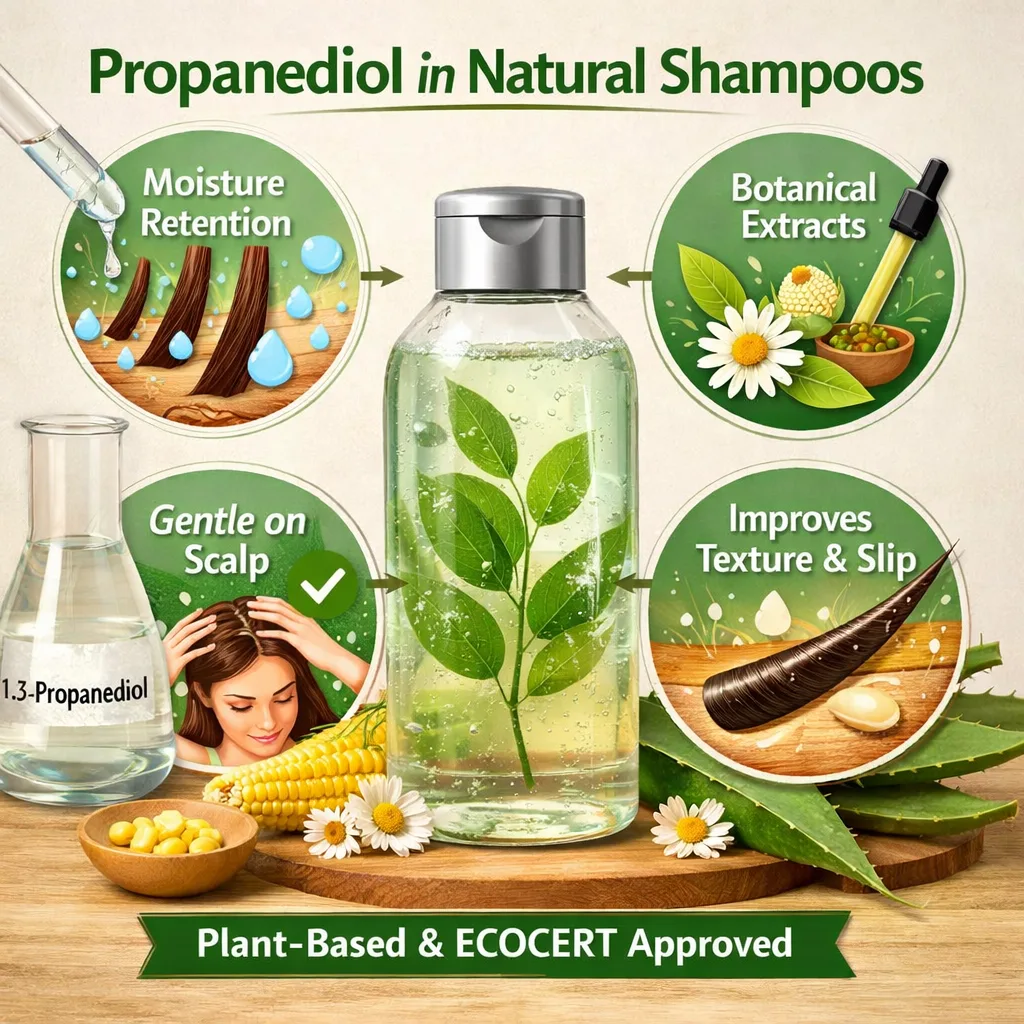
If you read ingredient labels on natural or clean-beauty shampoos, you will almost certainly see propanediol listed. While the name may sound technical or synthetic, propanediol has become a cornerstone ingredient in modern natural personal-care formulations.
This article explains what propanediol is, how it is made, and why natural shampoo brands rely on it as a safer, plant-based alternative to traditional solvents and humectants.
What Is Propanediol?
Propanediol (most commonly 1,3-propanediol) is a colorless, odorless liquid used in cosmetics as a humectant, solvent, and skin-conditioning agent.
In natural personal-care products, propanediol is typically derived from corn sugar through fermentation, making it bio-based, renewable, and biodegradable.
Basic Characteristics
- Clear, slightly viscous liquid
- Mildly sweet taste (non-toxic)
- Fully water-soluble
- Stable across a wide pH range
- Non-volatile (won’t evaporate or dry out hair)
Is Propanediol Natural?
This is an important distinction.
Propanediol used in natural shampoos is plant-derived, not petroleum-based. It is produced through a fermentation process using non-GMO corn glucose, similar to how alcohol or citric acid are made.
Because of this:
- It is accepted by many natural and clean beauty standards
- It is commonly ECOCERT- and COSMOS-approved (when sourced correctly)
- It is not the same as propylene glycol, which is petroleum-derived
Propanediol vs. Propylene Glycol
These two ingredients are often confused, but they are not interchangeable in clean formulations.
| Feature | Propanediol | Propylene Glycol |
|---|---|---|
| Source | Plant-based (corn sugar) | Petroleum-derived |
| Skin Sensitivity | Very low | Moderate (can irritate) |
| ECOCERT Acceptance | Yes | No |
| Common in Natural Shampoo | Yes | Avoided |
Natural brands specifically use propanediol to avoid the irritation concerns and perception issues associated with propylene glycol.
Why Propanediol Is Used in Natural Shampoos
1. Moisture Retention (Humectant)
Propanediol attracts and binds water to the hair and scalp, helping to:
- Reduce dryness
- Improve softness
- Prevent brittleness and breakage
- Support scalp comfort
Unlike glycerin, it does not feel sticky and performs well in both humid and dry environments.
2. Solvent for Botanical Extracts
Many natural shampoos contain:
- Herbal extracts
- Botanical actives
- Essential oil components
- Vitamins (like panthenol or niacinamide)
Propanediol helps dissolve and evenly distribute these ingredients, ensuring the shampoo performs consistently without separation.
3. Scalp-Friendly Alternative to Harsh Solvents
Traditional shampoos often rely on aggressive solvents that can:
- Strip scalp oils
- Cause itching or flaking
- Disrupt the skin barrier
Propanediol is non-stripping and non-sensitizing, making it suitable for:
- Sensitive scalps
- Children’s products
- Daily-use shampoos
- Post-treatment or color-safe hair care
4. Texture and Slip Improvement
In sulfate-free shampoos, achieving good texture is challenging. Propanediol helps:
- Improve spreadability
- Add light slip for easier detangling
- Reduce the “drag” sometimes felt with natural surfactants
This allows formulators to maintain a pleasant, salon-quality feel without silicones.
5. Supports Preservative Systems
Propanediol enhances preservative efficacy by:
- Lowering water activity
- Improving antimicrobial performance of natural preservatives
This helps brands avoid parabens and formaldehyde-releasing preservatives while maintaining product safety.
Is Propanediol Safe for Hair and Scalp?
Yes. Propanediol has an excellent safety profile.
- Rated low-hazard by cosmetic safety panels
- Non-comedogenic
- Non-sensitizing
- Safe for daily use
- Approved globally for cosmetic use
It is commonly used in baby products, eczema-friendly formulas, and medical-grade skincare, which speaks to its gentleness.
Does Propanediol Dry Out Hair?
No. This is a common misconception.
Unlike alcohols such as ethanol or isopropyl alcohol, propanediol does not evaporate and does not dehydrate hair. Instead, it actively supports hydration.
In well-formulated shampoos, it helps hair feel:
- Softer
- Smoother
- More manageable
Why You’ll See Propanediol in “Clean” Shampoo Labels
Natural shampoo brands choose propanediol because it allows them to:
- Eliminate petroleum-based solvents
- Avoid silicones and synthetic glycols
- Maintain product stability
- Deliver performance comparable to conventional shampoos
It is one of the key bridge ingredients that makes modern clean beauty functional without compromising ingredient philosophy.
Final Thoughts
Propanediol is a plant-derived, multifunctional ingredient that plays a critical role in modern natural shampoo formulations. Far from being something to avoid, it is often a positive indicator of thoughtful formulation—balancing performance, safety, and sustainability.
If you are evaluating shampoo labels and see propanediol listed, it generally means the brand has chosen a gentler, cleaner alternative to harsher traditional solvents while still delivering effective hair care.