What’s in Turmeric
If you’ve ever cooked with curry or golden milk, you’ve already met turmeric. That bright yellow spice does more than add color—it’s loaded with bioactive compounds that have made it a staple in traditional medicine and now a hot topic in modern research. Let’s break down what’s inside turmeric, what the science says, and why your wellness routine might benefit from this golden root.
Turmeric (Curcuma longa) contains over 100 different compounds, but a few stand out for their health effects:
- Curcuminoids – This group includes curcumin, demethoxycurcumin, and bisdemethoxycurcumin. Curcumin is the star player, responsible for turmeric’s color and much of its biological activity.
- Volatile oils (turmerones, atlantones, zingiberene) – These essential oils give turmeric its aroma and may have antimicrobial and anti-inflammatory properties.
- Proteins, polysaccharides, and minerals – While not as famous as curcumin, these compounds contribute to turmeric’s antioxidant and immune-supporting benefits.
🔬 Curcumin: The Most Studied Compound
Curcumin has been the subject of over 12,000 published papers—making it one of the most researched natural compounds in the world. Here are some highlights:
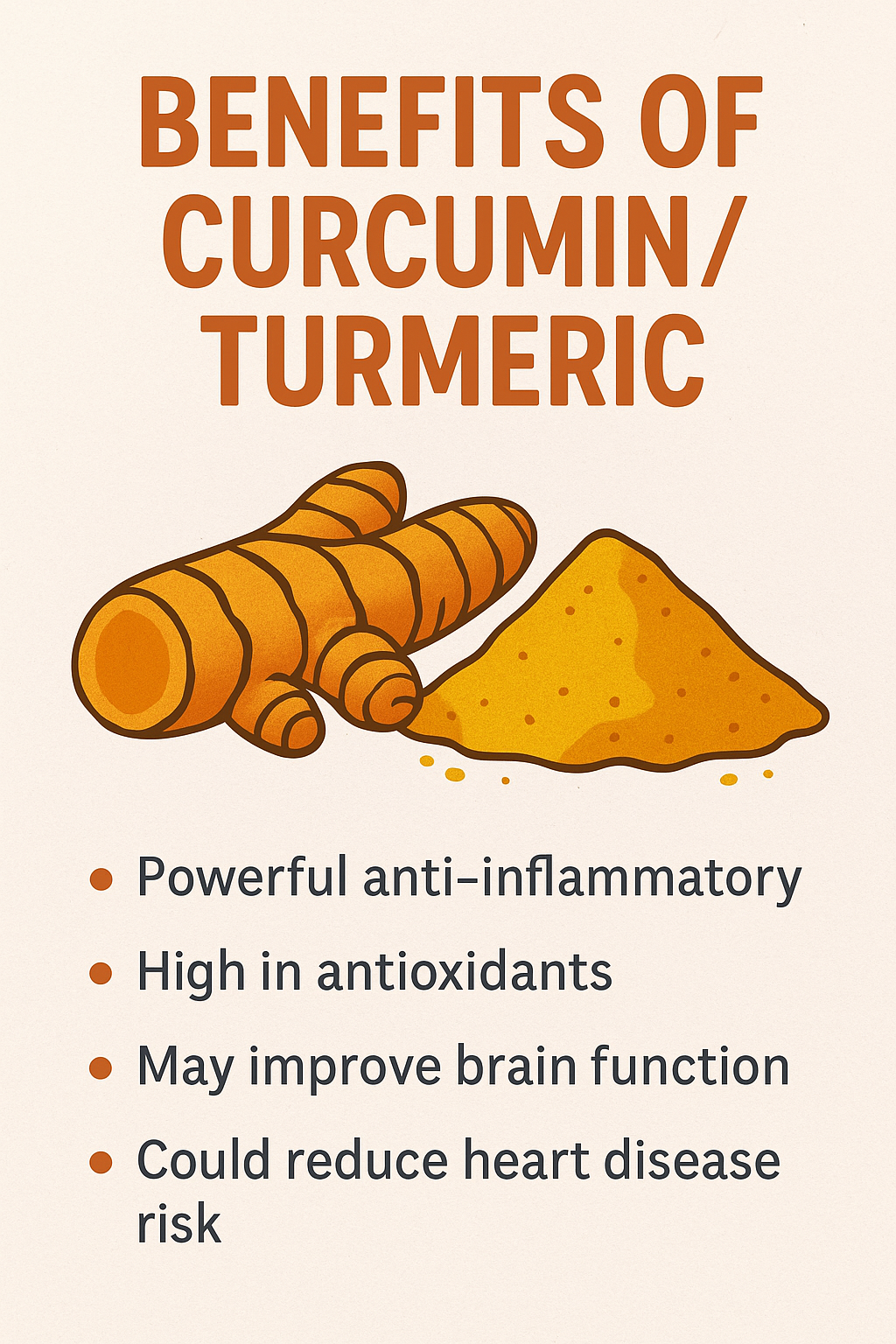
- Anti-inflammatory power: A study in Oncogene compared curcumin with common anti-inflammatory drugs and found it down-regulated multiple inflammatory pathways, especially NF-κB activation, a key driver of chronic inflammation.
- Antioxidant support: Research published in Free Radical Biology and Medicine showed curcumin boosts the activity of antioxidant enzymes like superoxide dismutase (SOD) and catalase, which protect cells from oxidative damage.
- Brain health: A Journal of Psychopharmacology trial found daily curcumin supplementation improved attention and memory in healthy older adults. Scientists believe it increases brain-derived neurotrophic factor (BDNF), a protein essential for learning and memory.
- Joint support: In a randomized controlled trial, patients with knee osteoarthritis reported reduced pain and improved function after taking curcumin supplements, performing as well as ibuprofen—but without gastrointestinal side effects.
🌱 Beyond Curcumin: Other Bioactive Compounds
Curcumin gets the spotlight, but turmeric’s other bioactive compounds matter too:
- Turmerones (ar-turmerone, α-turmerone): Studies suggest these oils may enhance curcumin absorption and stimulate stem cell growth in the brain.
- Polysaccharides (ukonan A, B, C): Research in Biochemical and Biophysical Research Communications showed they have immune-modulating effects, helping regulate inflammation and supporting healthy immune function.
- Demethoxycurcumin and bisdemethoxycurcumin: These curcuminoids have shown anticancer activity in cell studies, particularly against colon and breast cancer cells.
Together, these compounds create a synergistic effect, making whole turmeric potentially more beneficial than curcumin extract alone.
⚠️ Absorption: The Bioavailability Problem
One major challenge? Curcumin’s low bioavailability. The body doesn’t absorb it well, and much is metabolized before it can circulate in the bloodstream. But researchers have found hacks:
- Black pepper extract (piperine): Can increase curcumin absorption by up to 2000%.
- Fat-based delivery: Since curcumin is fat-soluble, taking it with oils (like in golden milk) boosts absorption.
- Nanoparticles and liposomal curcumin: Modern supplement formulations improve delivery and are currently under active research.
💡 What the Science Means for You
The takeaway? Turmeric is not just a cooking spice—it’s a functional food with strong anti-inflammatory, antioxidant, and even cognitive benefits. While curcumin is the hero, the lesser-known compounds like turmerones and polysaccharides are also pulling their weight.
If you’re using turmeric for health benefits:
- Choose a high-quality supplement with black pepper extract or advanced delivery systems.
- Don’t forget that dietary turmeric still contributes—adding it to curries, teas, and broths provides a whole-spectrum effect.
- Be consistent. Most studies use daily doses over weeks to months before benefits appear.
✅ Final Thoughts
Turmeric’s bioactive compounds—especially curcumin—are proving to be powerful allies against inflammation, oxidative stress, and even age-related cognitive decline. While researchers are still unraveling all the details, one thing is clear: this golden root has earned its place in both traditional kitchens and modern laboratories.