Why Is It Used in Natural Shampoo and Beauty Products?
If you have ever noticed a pearly, creamy sheen in a shampoo or body wash, chances are you were looking at glycol distearate at work. This ingredient is widely used in both conventional and natural-leaning beauty products to improve appearance, texture, and consumer experience—without affecting cleansing performance.
This article explains what glycol distearate is, how it’s made, and why it appears in many natural or “clean” shampoo formulations.
What Is Glycol Distearate?
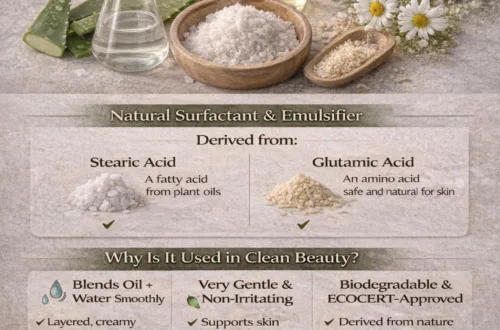
Glycol distearate is a fatty acid ester created from:
- Stearic acid (a naturally occurring fatty acid found in plants and animals)
- Glycol (most commonly plant-derived in natural formulations)
It appears as a white, waxy solid that melts into formulations during heating and recrystallizes as the product cools—creating a pearlescent or opaque effect.
In cosmetics, glycol distearate functions primarily as:
- A pearlizing agent
- A texture enhancer
- An opacifier
Is Glycol Distearate Natural?
This depends on how “natural” is defined.
Glycol distearate is not raw or whole-plant, but it is nature-derived:
- Stearic acid is typically sourced from vegetable oils (palm, coconut, or rapeseed)
- Glycol can be bio-based rather than petroleum-derived
- The ingredient is produced through esterification, a common cosmetic process
Because of this, glycol distearate is:
- Widely used in naturally positioned products
- Often accepted by clean beauty brands
- Not always ECOCERT-approved, but frequently used in “naturally inspired” formulations
Many brands consider it acceptable due to its excellent safety profile and low irritation risk.
Why Glycol Distearate Is Used in Natural Shampoo
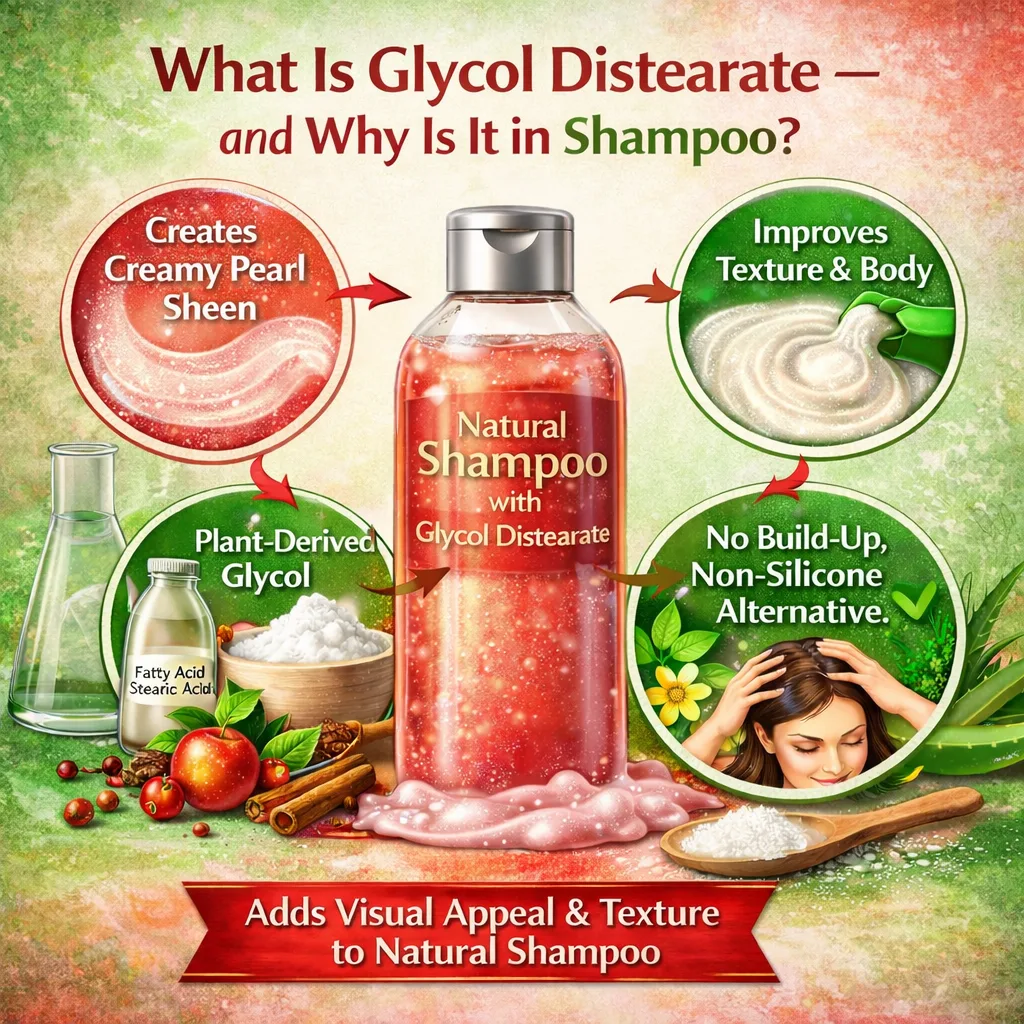
1. Creates a Pearlized, Luxurious Appearance
Natural shampoos often look:
- Clear
- Thin
- Less “premium” to consumers
Glycol distearate adds:
- A creamy, pearlescent sheen
- Visual thickness and richness
- A more “salon-like” appearance
This improves consumer perception without affecting cleansing ability.
2. Improves Texture and Body
In sulfate-free and natural surfactant systems, achieving a pleasant texture is difficult.
Glycol distearate helps:
- Add body and viscosity
- Improve pour behavior
- Create a smoother, creamier feel during use
It does this without acting as a conditioner or coating agent.
3. Enhances Product Stability and Uniformity
When properly formulated, glycol distearate:
- Helps suspend visual effects evenly
- Prevents phase separation
- Maintains a consistent look throughout shelf life
This is especially useful in shampoos containing:
- Aloe vera
- Botanical extracts
- Mild surfactants
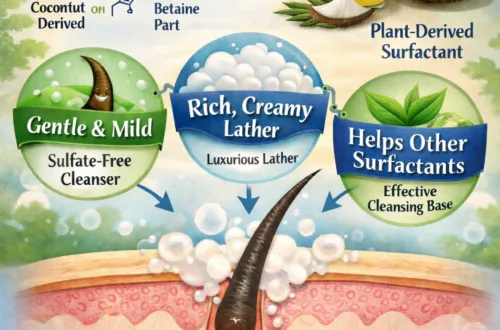
4. Compatible with Mild, Natural Surfactants
Glycol distearate works well with:
- Glucosides
- Isethionates
- Betaine-based systems
It does not interfere with foaming, which is critical for natural shampoos that already foam less than conventional ones.
Does Glycol Distearate Condition Hair?
No—and this is often misunderstood.
Glycol distearate:
- Does not coat the hair shaft
- Does not act like silicone
- Does not build up on hair
Its function is aesthetic and rheological, not conditioning.
Any softness felt after washing comes from:
- Surfactant mildness
- Conditioning agents added separately
- Overall formulation balance
Is Glycol Distearate Safe?
Yes. Glycol distearate has a long history of safe cosmetic use.
- Non-toxic
- Non-sensitizing at cosmetic levels
- Suitable for rinse-off products
- Approved for use globally
It is commonly found in:
- Baby washes
- Facial cleansers
- Body washes
- Shampoos and conditioners
Glycol Distearate vs. Silicones
| Feature | Glycol Distearate | Silicones |
|---|---|---|
| Function | Appearance & texture | Conditioning & slip |
| Build-up | No | Possible |
| Biodegradability | Higher | Lower |
| Rinse-off behavior | Clean | Can coat hair |
| Common in natural shampoo | Yes | Often avoided |
Many natural brands use glycol distearate specifically to replace the “luxury look” of silicones without their downsides.
Typical Usage Levels
In shampoos and cleansers:
- 0.5%–3%, depending on desired pearl effect
Higher levels increase opacity and thickness but must be balanced to avoid waxy feel.
Why You’ll See Glycol Distearate in Clean Beauty Products
Natural and clean beauty brands face a tradeoff:
- Consumers expect rich, creamy shampoos
- Natural surfactants are often thin and clear
Glycol distearate bridges this gap by delivering:
- Visual appeal
- Texture enhancement
- Stability
- Consumer familiarity
All without compromising scalp health or hair integrity.
Final Takeaway
Glycol distearate is a functional, low-risk, nature-derived ingredient that plays an important role in modern natural shampoo and beauty formulations. While it does not cleanse or condition hair directly, it significantly improves the look, feel, and usability of natural products.
When you see glycol distearate on a label, it usually indicates a product designed to feel luxurious, stable, and consumer-friendly, even within a clean or naturally positioned formulation.