Its Purpose, Benefits, and Why It’s Making a Comeback
In the crowded world of modern hair care—dominated by sulfates, silicones, and synthetic conditioning agents—tallow has re-emerged as a surprising and compelling ingredient. Once a cornerstone of traditional soap and personal care formulations, tallow is now gaining renewed interest among formulators, clean-beauty advocates, and consumers seeking minimalist, biologically compatible products.
This article explores what tallow is, why it is used in shampoo, how it benefits the scalp and hair, and who it is best suited for, with a clear, evidence-based perspective.
What Is Tallow?
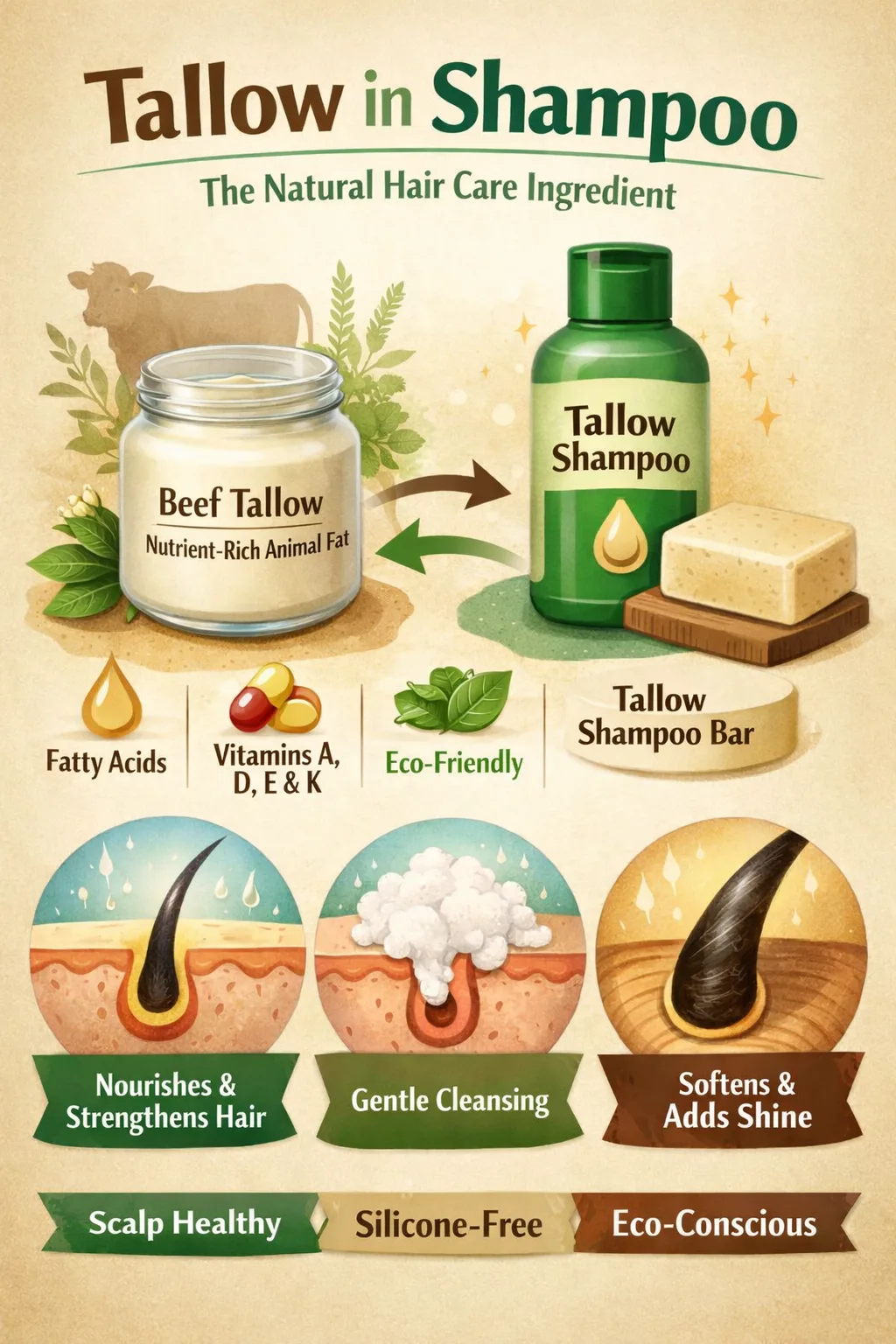
Tallow is a rendered fat, most commonly derived from beef or lamb suet. When properly rendered and purified, high-quality tallow is odor-neutral, shelf-stable, and exceptionally rich in skin-supportive lipids.
Historically, tallow was a primary base for:
- Soaps
- Shampoos and hair washes
- Ointments and balms
- Household and personal cleansing products
Its removal from mainstream cosmetics was driven less by performance and more by industrial scalability, marketing trends, and the rise of petroleum-derived surfactants.
Why Use Tallow in Shampoo?
1. Lipid Compatibility With the Scalp
Human scalp sebum is composed largely of:
- Oleic acid
- Palmitic acid
- Stearic acid
Tallow naturally contains these same fatty acids in similar ratios. This biological compatibility allows tallow-based shampoos to cleanse without aggressively stripping the scalp’s protective barrier.
Result: Less rebound oil production, reduced dryness, and improved scalp balance.
2. Gentle, Non-Detergent Cleansing
Unlike conventional shampoos that rely on sulfates (SLS, SLES), tallow-based shampoos typically cleanse through:
- Mild saponification (in bar form)
- Emulsification of oils and debris
- Mechanical cleansing during massage
This makes tallow especially attractive for individuals with:
- Sensitive scalps
- Eczema or psoriasis-prone skin
- Post-inflammatory scalp conditions
- Children or elderly users
3. Natural Conditioning Without Silicone Buildup
Tallow coats the hair shaft with a thin, breathable lipid layer, helping to:
- Reduce friction
- Improve softness and manageability
- Minimize breakage
- Enhance natural shine
Unlike silicones, tallow does not create an impermeable film that requires harsh detergents to remove. Over time, many users report that hair feels healthier with less frequent washing.
Nutrient Profile: Why Tallow Nourishes Hair and Scalp
High-quality, grass-fed tallow contains trace amounts of fat-soluble vitamins and cofactors that support skin health:
- Vitamin A – supports cell turnover and scalp integrity
- Vitamin D – contributes to follicular health
- Vitamin E – antioxidant protection
- Vitamin K2 – supports skin structure and repair
While shampoo is a rinse-off product, regular exposure to these lipids can still support long-term scalp health, especially when combined with gentle cleansing practices.
Tallow vs. Plant Oils in Shampoo
| Feature | Tallow | Coconut / Seed Oils |
|---|---|---|
| Fatty acid similarity to human sebum | Very high | Moderate to low |
| Comedogenic risk on scalp | Low | Variable |
| Oxidative stability | High | Often lower |
| Need for preservatives | Minimal | Higher |
| Environmental footprint | By-product of food system | Often monocrop-dependent |
Tallow’s oxidative stability is particularly important in shampoo formulations, as it reduces rancidity and extends shelf life without synthetic antioxidants.
Benefits of Tallow Shampoo by Hair & Scalp Type
Dry or Damaged Hair
- Restores softness
- Reduces breakage
- Improves elasticity
Curly or Coarse Hair
- Enhances curl definition
- Reduces frizz
- Supports moisture retention
Sensitive or Reactive Scalp
- Minimal ingredient load
- Reduced irritation
- Improved barrier function
Oily Scalp (Yes—Really)
By supporting the scalp’s lipid balance, tallow can reduce compensatory oil overproduction over time.
Is Tallow Shampoo Greasy?
This is one of the most common concerns—and when properly formulated, the answer is no.
Key factors:
- Proper rendering and deodorization
- Balanced formulation (not overly fatty)
- Adequate rinse technique
Many users transitioning from detergent shampoos experience a short adjustment period as the scalp recalibrates oil production. This is temporary and often resolves within 1–3 weeks.
Tallow Shampoo Bars vs. Liquid Formulas
Shampoo Bars
- Typically saponified
- Minimal ingredients
- No plastic packaging
- Longer shelf life
Liquid Tallow Shampoos
- Emulsified with mild surfactants
- Creamier feel
- Easier transition for conventional users
Both formats benefit from tallow’s lipid profile; choice depends on user preference and hair type.
Ethical and Sustainability Considerations
Tallow used in high-quality personal care products is often:
- Sourced from grass-fed, pasture-raised cattle
- A by-product of the food industry
- More resource-efficient than many exotic plant oils
From a sustainability standpoint, using tallow reduces waste and supports full-use animal agriculture rather than reliance on monoculture crops.
Who Should Avoid Tallow Shampoo?
Tallow shampoo may not be ideal for:
- Strict vegans
- Individuals with specific animal-product sensitivities
- Those seeking ultra-high-foam experiences
That said, many users prioritize performance and skin compatibility over traditional cosmetic aesthetics.
The Bigger Picture: Why Tallow Is Returning to Hair Care
The renewed interest in tallow reflects broader trends:
- Ingredient minimalism
- Skin-barrier science
- Traditional formulation wisdom
- Skepticism of over-engineered cosmetics
As consumers become more informed, ingredients once dismissed as “old-fashioned” are being reevaluated for their functional superiority.
Conclusion
Tallow in shampoo serves a clear, functional purpose: gentle cleansing, natural conditioning, and support of the scalp’s biological balance. Far from being a novelty, it represents a return to formulations that work with the body rather than against it.
For individuals seeking:
- Fewer ingredients
- Better scalp health
- Sustainable, time-tested solutions
Tallow-based shampoo is not just a trend—it is a logical evolution in clean, effective hair care.