If you’ve been diving into the world of functional medicine, chances are you’ve stumbled across the term MTHFR gene mutation. No, it’s not a typo—it’s short for methylenetetrahydrofolate reductase, an enzyme that plays a key role in how your body processes folate (vitamin B9) and methylation pathways.
Understanding MTHFR is important because this single gene mutation can affect everything from your detox pathways to fertility, energy levels, mood regulation, and even your cardiovascular health.
Let’s break it down simply and casually—without all the medical jargon overload.
What Is the MTHFR Gene Mutation?
The MTHFR gene mutation is a variation that can make it harder for your body to convert folic acid into its active form, methylfolate. Since methylfolate is essential for DNA repair, neurotransmitter production (think serotonin and dopamine), and detoxing homocysteine, having a sluggish pathway here can cause a ripple effect in your overall health.
The two most common variants are:
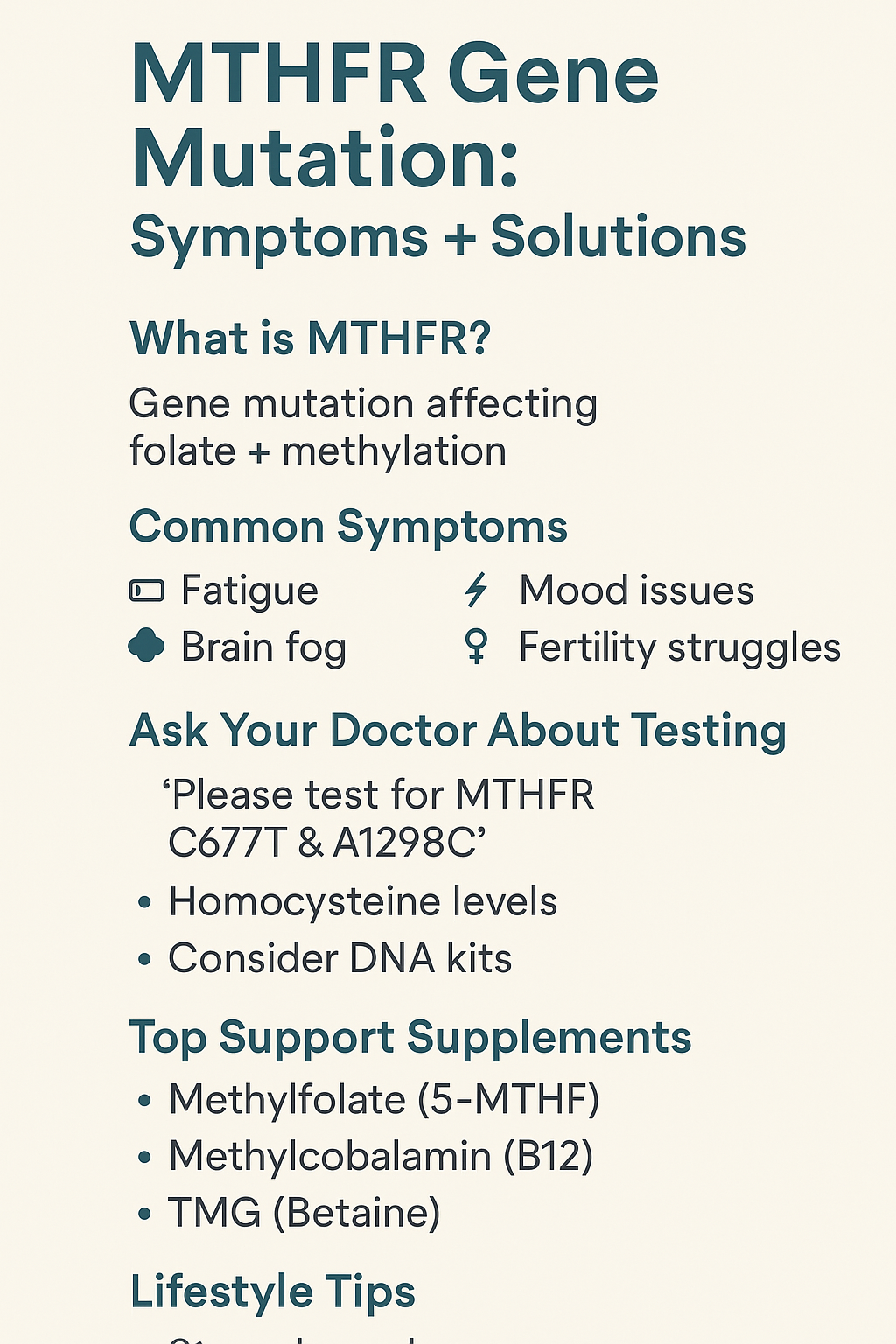
C677T – more strongly linked to higher homocysteine levels and cardiovascular risks. A1298C – more connected to mood and detox challenges.
Some people have one copy (heterozygous), others have two (homozygous), which may make symptoms more noticeable.
Common Symptoms of MTHFR Mutation
Not everyone with MTHFR issues has symptoms, but common ones include:
Chronic fatigue or low energy Anxiety, depression, or mood swings Recurrent miscarriages or fertility struggles Brain fog and memory problems Cardiovascular issues tied to elevated homocysteine Migraines and headaches
If this sounds familiar, testing through a functional medicine doctor or even DNA testing kits can help you get clarity.
How to Support Your Body if You Have MTHFR
The good news? You’re not doomed by your genes. Lifestyle and supplementation can make a big difference.
Choose methylated vitamins – Look for methylfolate (5-MTHF) instead of folic acid. Add methylated B12 – Forms like methylcobalamin or adenosylcobalamin support energy and mood. Lower homocysteine naturally – With B6, B12, folate, and betaine (TMG). Detox support – Cruciferous veggies, activated charcoal, sauna, and hydration can support methylation pathways. Lifestyle – Sleep, exercise, and stress management all play into how efficiently your body methylates.
Top Supplements for MTHFR Support (Available on Amazon) – if you are thinking about buying please use our links below! We get credit for that and it helps the blog!
| Here are some of the most highly rated, MTHFR-friendly products: Thorne Methyl-Guard Plus(LINK) – High-quality combo of methylated B vitamins. BioActive Vitamin B12 – 5000 mcg – Active B12 that bypasses sluggish pathways. Triquetra Health Folate(LINK)– Bioavailable folate in 5-MTHF form. Seeking Health Optimal Liposomal Glutathione (LINK)– Supports detox, especially if your methylation is taxed. NOW Foods TMG (Trimethylglycine) (LINK) – Helps regulate homocysteine levels. |
Final Thoughts
Having an MTHFR mutation isn’t a life sentence—it’s simply a clue about how your body works. With the right diet, lifestyle shifts, and supplements, you can bypass genetic roadblocks and help your body thrive.
If you suspect you have MTHFR or you’ve tested positive, remember: it’s all about giving your body the active forms of nutrients it needs to function at its best.