Fasting isn’t just some new diet craze
—it’s been around for centuries. From spiritual practices to modern biohacking, people have always known there’s something powerful about giving the body a break from constant eating. And now, science is catching up with what our ancestors already knew: fasting can improve metabolism, support weight loss, boost brain health, and even help with longevity.
If you’ve been curious about fasting but don’t know where to start, let’s break it down in a way that feels doable (and sustainable).
What Is Fasting?
Fasting simply means voluntarily going without food for a certain period. It’s not necessarily about starving yourself—it’s about creating intentional eating windows. Popular styles include:
- Intermittent fasting (16:8): Fast for 16 hours, eat during an 8-hour window.
- Alternate day fasting: Eat normally one day, fast or eat very little the next.
- 24-hour fasting (OMAD): One meal a day, often used for metabolic reset.
- Extended fasts: 48–72 hours, usually for advanced practitioners.
The beauty of fasting is flexibility—you can adjust it to fit your lifestyle.
Benefits of Fasting
Here’s where fasting gets exciting:
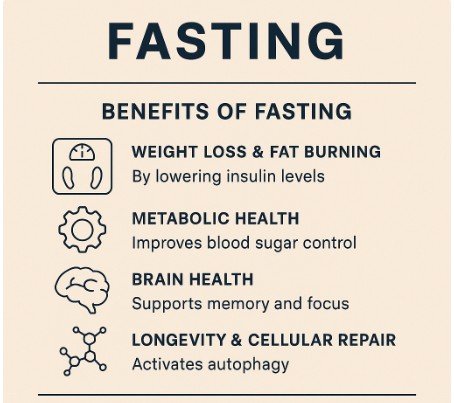
- Weight loss & fat burning – By lowering insulin levels, your body taps into fat stores for energy.
- Metabolic health – Fasting improves blood sugar control, supports insulin sensitivity, and can help reverse insulin resistance.
- Brain health – Increases production of BDNF (brain-derived neurotrophic factor), which supports memory and focus.
- Longevity & cellular repair – Activates autophagy, your body’s “clean-up mode,” recycling damaged cells and reducing inflammation.
- Hormone balance – Can support healthy levels of growth hormone and even improve thyroid function in some cases.
Tips for Getting Started
- Start small—try skipping breakfast and eating lunch and dinner.
- Stay hydrated—water, black coffee, and herbal teas are your friends.
- Support electrolytes—low energy during fasting is often due to electrolyte imbalance, not lack of calories.
- Break your fast gently—start with protein, healthy fats, and vegetables instead of sugar or heavy carbs.
Top Products to Support Your Fasting Journey
You don’t need much to fast, but the right tools and supplements can make it easier and more effective:
- LMNT Electrolyte Packets – Zero sugar, high sodium, magnesium, and potassium.
- ReLyte Electrolytes – Clean ingredients and even a kids’ line, perfect for family fasting support.
- Kettle & Fire Bone Broth – Great for gentle fast breaks and gut health.
- Pique Fasting Tea – Catechin-rich teas that support autophagy while keeping hunger down.
- Berberine Supplements – Supports blood sugar control, often called “nature’s Ozempic.”
- Continuous Glucose Monitor (CGM) – For the data lovers who want to see how fasting impacts their blood sugar in real time. These are pretty neat but come with a premium price tag. For diabetics there are options like Freestyle and Dexcom. You can buy those over the counter but they can cost well over a $100 a month. There are also options like Stelo, which come from the same maker as the Dexcom but target everyday consumers. Also another brand which I don’t have much experience with, Lingo.
Final Thoughts
Fasting isn’t a one-size-fits-all solution, but it’s a powerful tool for weight loss, energy, and longevity. Whether you’re doing intermittent fasting or trying a longer fast under guidance, the key is listening to your body. Pair fasting with nutrient-dense foods, plenty of hydration, and smart supplementation—and you’ve got yourself a modern wellness hack that’s stood the test of time.