Fibromyalgia: The Root Cause Nobody’s Talking About
If you’ve ever dealt with constant fatigue, brain fog, and body aches that just don’t make sense, chances are you’ve heard the word fibromyalgia. It’s one of those chronic conditions that affects millions worldwide—mostly women—but still manages to confuse doctors and patients alike. So what’s really at the root of fibromyalgia? Let’s break it down in a way that makes sense.
What Is Fibromyalgia?
Fibromyalgia is a chronic pain disorder marked by widespread muscle pain, tenderness, sleep disturbances, and cognitive issues (aka fibro fog). It’s often lumped in with autoimmune diseases because of how it overlaps with conditions like lupus, rheumatoid arthritis, and Hashimoto’s thyroiditis.
But here’s the kicker: fibromyalgia doesn’t show up on blood work or imaging scans, making it a “diagnosis of exclusion.” That’s why so many patients spend years bouncing between specialists before finally getting answers.
The Root Cause of Fibromyalgia
While there isn’t one single “smoking gun,” research suggests fibromyalgia is a multi-factor condition. Here are some of the leading root causes experts point to:
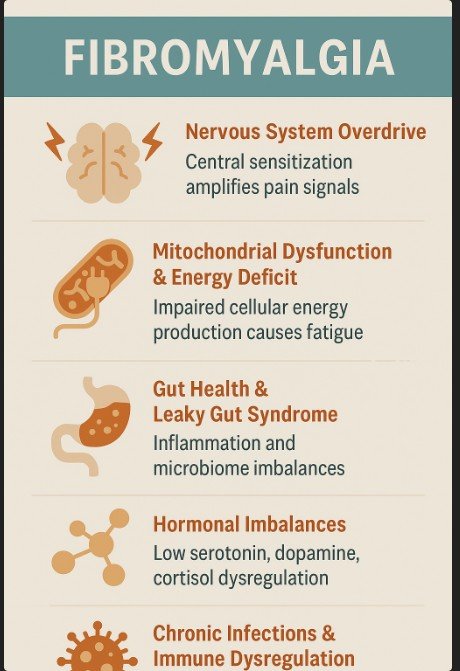
1. Nervous System Overdrive
Fibromyalgia is linked to central sensitization—meaning your nervous system stays on high alert, amplifying pain signals. Think of it like the body’s volume knob stuck on “max.”
2. Mitochondrial Dysfunction & Energy Deficit
Cells need healthy mitochondria to produce energy. In fibromyalgia patients, mitochondrial function may be impaired, leading to fatigue and muscle pain that feels like you ran a marathon without training.
3. Gut Health & Leaky Gut Syndrome
Your gut and brain talk to each other constantly. Many fibro patients also deal with IBS, food sensitivities, and microbiome imbalances, suggesting that gut inflammation plays a major role.
4. Hormonal Imbalances
Low levels of serotonin, dopamine, and cortisol dysregulation are often found in fibro sufferers. That’s why stress, poor sleep, or hormone shifts can make symptoms worse.
5. Chronic Infections & Immune Dysregulation
Some researchers believe underlying infections like Epstein-Barr virus, Lyme disease, or candida overgrowth may trigger fibro symptoms by keeping the immune system in a constant state of overdrive.
6. Environmental & Lifestyle Triggers
Toxins, poor diet, lack of sleep, and even trauma (emotional or physical) can all play a role in turning on the fibro switch.
👉 Bottom line: fibromyalgia isn’t “all in your head.” It’s a complex web of nervous system dysregulation, immune system imbalance, and cellular energy depletion.
Natural Ways to Support Fibromyalgia Management
While there’s no one-size-fits-all cure, lifestyle changes and supplements can help ease symptoms. Always talk with your healthcare provider before starting new therapies, but here are some popular, evidence-based options:
Top Products That May Help Fibromyalgia Symptoms
| Category | Product | Why It Helps |
|---|---|---|
| Energy & Mitochondria Support | CoQ10 Supplement | Boosts cellular energy, may reduce fatigue |
| Sleep & Relaxation | Magnesium Glycinate | Supports deep sleep, muscle relaxation, nervous system calm |
| Gut Health | Probiotic Blend | Balances microbiome, supports digestion, reduces inflammation |
| Anti-Inflammatory Support | Turmeric Curcumin | Reduces pain and inflammation naturally |
| Adaptogens for Stress | Ashwagandha Supplement | Balances cortisol, reduces anxiety, supports resilience |
| Comprehensive Multivitamin | Thorne Basic Nutrients | Covers micronutrient gaps, supports energy metabolism |
(Yes, all of these are widely available on Amazon for convenience.)
Final Thoughts
The root cause of fibromyalgia is not just one thing—it’s an interplay of nervous system sensitivity, immune dysfunction, hormone shifts, and gut health. Addressing fibro takes a whole-body approach: supporting energy production, reducing inflammation, balancing hormones, and healing the gut.
If you’re struggling with fibro symptoms, know that you’re not alone—and that small, consistent changes in diet, supplements, stress management, and sleep hygiene can make a massive difference.