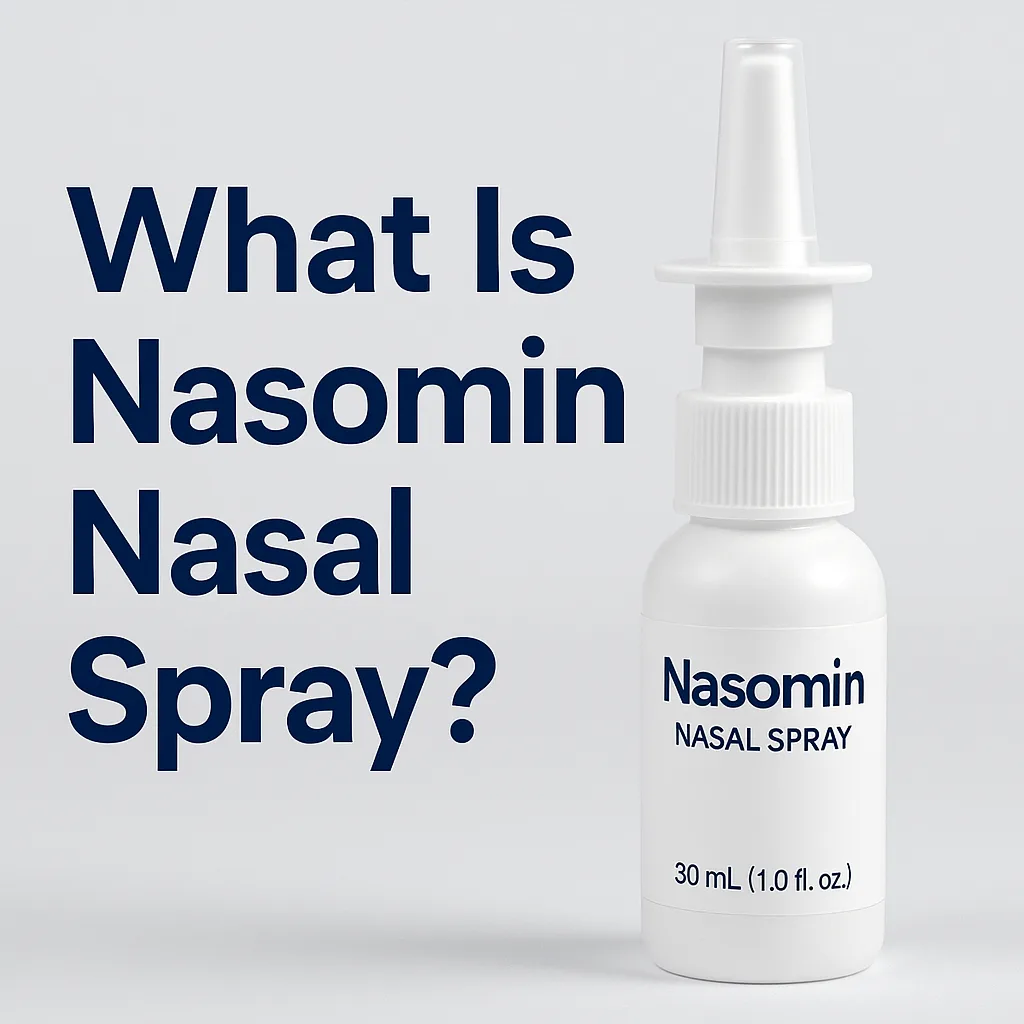
💨 “Nasomin Nasal Spray: The Gentle, Modern Alternative for Stuffy, Sensitive Noses”
It’s funny how much trouble one small part of the face can cause.
The nose — that humble piece of anatomy — is responsible for filtering, warming, and humidifying every breath we take. Yet when it’s angry, inflamed, or clogged, it can make you miserable from morning till night.
Over the years in family practice, I’ve seen more people addicted to nasal sprays than I’d like to admit — not because they love them, but because they can’t live without them. Between rebound congestion, dryness, and side effects, it’s become a bit of a medical Catch-22.
That’s why Nasomin caught my eye. It’s newer, gentler, and built on a more holistic understanding of sinus health — focusing on repair and balance rather than brute-force decongestion.
Let’s dig into what it is, why it exists, and how it compares to the big players like Flonase, Astepro, and Ipratropium.
☕ “Doc, My Nose Is a Full-Time Job”
If you’ve ever tried managing chronic congestion, you know the drill: a daily rotation of saline rinses, antihistamines, steroid sprays, and sometimes even antibiotics.
Patients tell me they feel like part-time pharmacists.
So when a spray promises to help with fewer side effects, I pay attention.
Nasomin nasal spray isn’t a decongestant in the traditional sense. It doesn’t use steroids or antihistamines. Instead, it’s formulated with anti-inflammatory, antioxidant, and hydrating ingredients that support healing of the nasal mucosa — the delicate tissue lining the inside of your nose.
Think of it as nasal therapy, not nasal warfare.
🌿 What Exactly Is Nasomin and How Long Has It Been Around?
Nasomin isn’t brand-new, but it’s relatively recent compared to steroid sprays like Flonase (fluticasone), which have been around since the 1990s.
It emerged in European and Asian markets roughly a decade ago, designed as a non-pharmaceutical, anti-inflammatory nasal care product for people with chronic sinus irritation, allergies, and post-viral inflammation.
Rather than focusing on hormone-based steroids or chemical antihistamines, Nasomin uses:
| Key Ingredient | Function |
|---|---|
| Xylitol | Antibacterial and moisturizing; helps prevent bacterial adhesion |
| Dexpanthenol (Vitamin B5) | Soothes and repairs irritated mucosal tissue |
| Sodium hyaluronate (Hyaluronic acid) | Hydrates the nasal lining and supports natural healing |
| Buffered saline solution | Gently cleans allergens, mucus, and pollutants |
| Antioxidants or plant polyphenols | Reduce oxidative stress in inflamed tissue |
This makes it more of a nutrient spray for your sinuses — hydrating, anti-inflammatory, and restorative — especially useful for dry climates, allergies, or after long-term steroid use.
🧠 Why People Use It (and What It’s Not)
Most people reach for Nasomin because they’re tired of the side effects of other sprays — the nosebleeds, dryness, or “rebound congestion” that can come from long-term steroid or decongestant use.
Common reasons I see people use it:
- Chronic sinus irritation or dryness
- Recovery after sinus infection or COVID-19
- Post-surgery mucosal healing
- Mild seasonal allergies
- Nasal maintenance for CPAP users or travelers
Nasomin doesn’t cause dependency or tissue thinning — two issues we see with stronger sprays.
It’s safe for long-term, daily use, including in children and older adults, because it’s more of a supportive product than a medication.
⚗️ Comparing Nasomin to the “Big Three” Sprays
Let’s break it down.
| Feature | Nasomin | Flonase (Fluticasone) | Astepro (Azelastine) | Ipratropium Nasal Spray (rx only) |
|---|---|---|---|---|
| Type | Non-steroidal healing spray | Corticosteroid | Antihistamine | Anticholinergic (dries secretions) |
| Main Function | Hydrates & reduces inflammation naturally | Reduces allergic inflammation | Blocks histamine reaction | Reduces runny nose & mucus |
| Common Use | Chronic irritation, dryness, mild allergies | Allergic rhinitis, congestion | Seasonal allergies | Runny nose, non-allergic rhinitis |
| Time to Work | Gradual (days) | 3–5 days | Within hours | Within hours |
| Long-term Safety | Excellent | Good (watch for dryness or nosebleeds) | Good (can cause bitter taste) | Good (dryness common) |
| Systemic Effects | None | Possible with overuse | Minimal | Minimal |
| Rebound Congestion | None | Rare | None | None |
The main difference?
- Flonase and Astepro target immune pathways — powerful, but they suppress the body’s natural inflammation mechanisms.
- Ipratropium just dries everything up (great for drippy noses, not so great for desert-like sinuses).
- Nasomin, meanwhile, restores mucosal health — more of a “maintenance and recovery” option than an acute symptom reliever.
If Flonase is a firefighter and Ipratropium is a sponge, Nasomin is a gardener — tending, hydrating, and rebuilding tissue so it functions naturally again.
🌼 Benefits People Notice
Patients who switch to Nasomin often describe it like this:
“It doesn’t give me that instant rush, but my nose feels normal again.”
That’s exactly the point. Nasomin’s benefits come gradually — more from healing than suppression.
Commonly reported improvements include:
- Less nasal dryness and crusting
- Better airflow
- Reduced sneezing or irritation
- Fewer sinus infections over time
- Improved comfort with CPAP or indoor heat use
Some even report that they no longer need their steroid spray as often.
⚠️ Side Effects and Risks
Like any nasal product, Nasomin isn’t perfect for everyone. But side effects tend to be mild and short-lived.
Possible reactions include:
- Temporary stinging or mild burning (especially with dry mucosa)
- Sneezing immediately after use
- Taste changes if the spray drips into the throat
True allergic reactions are rare, but possible — especially in those sensitive to xylitol or certain plant-based antioxidants.
The biggest “risk,” honestly, is expecting it to work like a decongestant — it’s not meant for rapid relief. It’s meant for long-term balance.
🩺 My Take as a Family Doc
Here’s how I usually guide patients:
- If your main issue is allergy-related swelling or sneezing, Flonase or Astepro may still be the best first-line option.
- If your problem is chronic dryness, overuse of sprays, or long-term irritation, Nasomin is a wonderful gentler choice.
- If you’re tired of dependency or just want a more natural approach, Nasomin fits perfectly into a holistic regimen.
I often recommend combining it with:
- Saline rinses or neti pots (for cleansing)
- Humidifiers during winter months
- Antioxidant support (like vitamin C or quercetin)
Together, these small habits create sustainable sinus health instead of the “boom and bust” cycle of congestion and relief.
🌾 A Nose for the Future
It’s rare that something new in ENT medicine focuses on healing instead of just controlling symptoms.
Nasomin does exactly that — it helps the nose do what it’s meant to do: protect, filter, and breathe freely.
And out here in the rural clinic — where the air’s dusty, the pollen’s thick, and the people are stubborn — I’ve found that sometimes the most effective medicine isn’t the strongest. It’s the one that helps the body remember how to heal itself.
🌿 Quick Facts
| Category | Details |
|---|---|
| Full Name | Nasomin Nasal Spray |
| Main Purpose | Moisturizes, repairs, and soothes nasal passages |
| Contains | Xylitol, dexpanthenol, sodium hyaluronate, antioxidants |
| Compared To | Flonase, Astepro, Ipratropium (gentler alternative) |
| Best For | Dryness, chronic irritation, allergy maintenance |
If you are interested in purchasing an Iodine Nasal Spray please us this link, Nasomin amazon link, it helps the website and we get credit! Thanks.