Why Is It Used in Natural Shampoos?
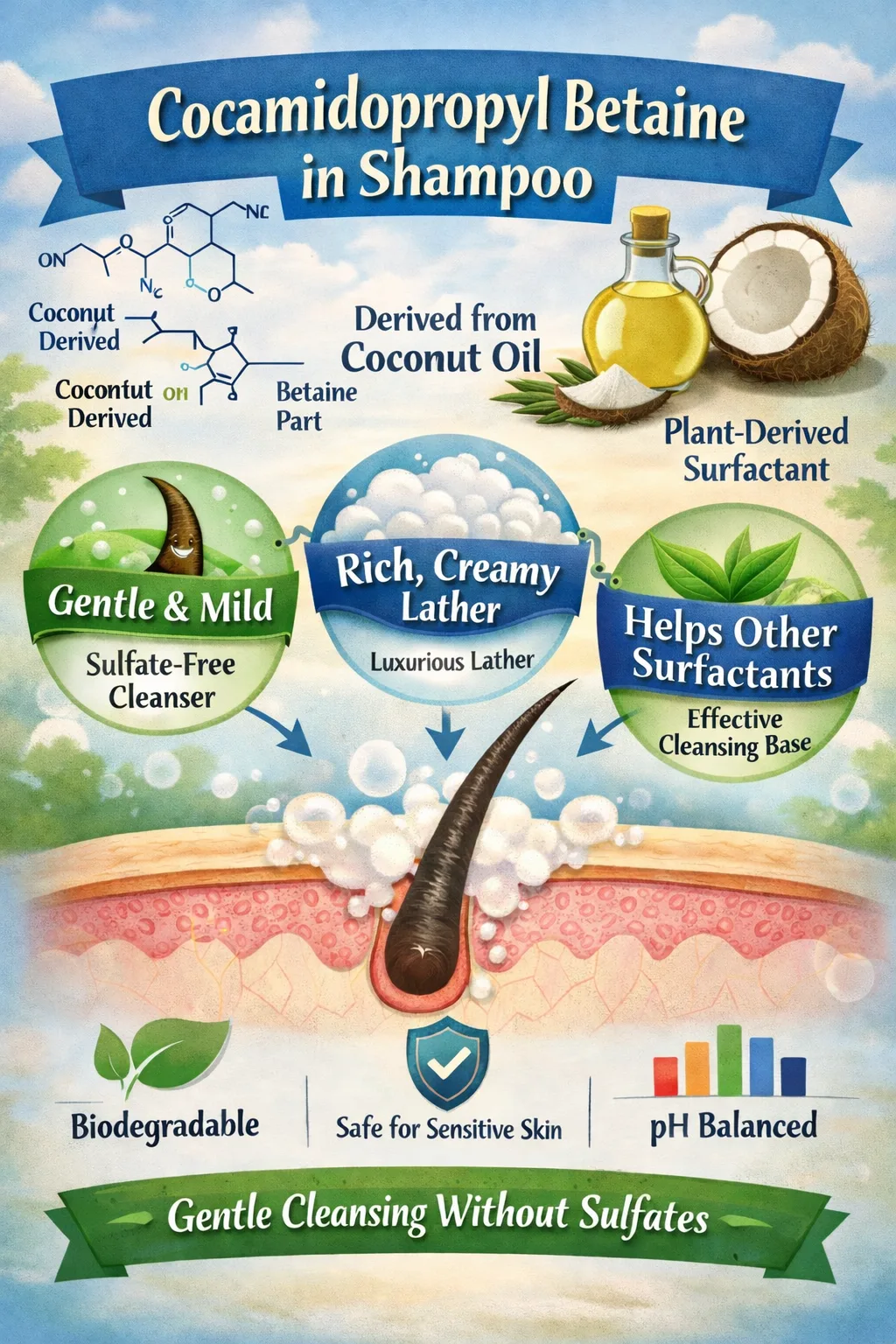
If you read ingredient labels on natural, sulfate-free shampoos, one name appears frequently: cocamidopropyl betaine. Despite its long, chemical-sounding name, it is widely used in clean-beauty and plant-based haircare formulations.
This article explains what cocamidopropyl betaine is, how it is made, why natural brands use it, and whether it is safe for sensitive skin—in clear, practical terms.
What Is Cocamidopropyl Betaine?
Cocamidopropyl betaine (CAPB) is a mild, plant-derived surfactant primarily used as a cleansing and foaming agent in shampoos, body washes, facial cleansers, and baby products.
In simple terms, it helps shampoo:
- Remove dirt and oil
- Create gentle foam
- Reduce irritation from stronger cleansers
It is classified as an amphoteric surfactant, meaning it can behave as either positively or negatively charged depending on the pH of the formula. This makes it extremely versatile and skin-friendly.
Where Does Cocamidopropyl Betaine Come From?
Although it sounds synthetic, cocamidopropyl betaine is derived from coconut oil.
How it’s made (simplified):
- Fatty acids are extracted from coconut oil
- These fatty acids are processed into coconut-based surfactant intermediates
- The final compound is combined with betaine (a naturally occurring amino acid derivative)
The result is a biodegradable, coconut-derived cleanser suitable for natural and sulfate-free formulations.
Important distinction:
Cocamidopropyl betaine is plant-derived, but it is chemically processed, which is why it is sometimes described as “naturally derived” rather than “100% raw natural.”
Why Natural Shampoos Use Cocamidopropyl Betaine
1. It Is Much Gentler Than Sulfates
Traditional shampoos rely on sodium lauryl sulfate (SLS) or sodium laureth sulfate (SLES), which:
- Strip natural oils
- Disrupt the scalp barrier
- Cause dryness and irritation
Cocamidopropyl betaine:
- Cleans without harsh degreasing
- Preserves scalp moisture
- Is suitable for daily use
This makes it ideal for dry hair, curly hair, color-treated hair, and sensitive scalps.
2. It Boosts Foam—Without Harshness
Many consumers associate foam with cleanliness. Natural surfactants often struggle to lather on their own.
CAPB:
- Enhances foam quality
- Produces a creamy, stable lather
- Makes sulfate-free shampoos feel more “luxurious”
Importantly, it reduces irritation when paired with other cleansers—acting as a buffer rather than an aggressor.
3. It Works Well With Other Natural Surfactants
Cocamidopropyl betaine is rarely used alone. It is commonly paired with:
- Decyl glucoside
- Coco glucoside
- Sodium cocoyl glutamate
- Sodium lauroyl sarcosinate
This allows formulators to build effective yet gentle cleansing systems that meet natural-product standards.
4. It Helps Thicken Shampoos Naturally
CAPB contributes to:
- Improved viscosity
- Better gel structure
- Reduced need for synthetic thickeners
This is especially important for brands aiming to avoid PEGs or petroleum-derived additives.
Is Cocamidopropyl Betaine Safe?
Regulatory & Safety Profile
Cocamidopropyl betaine is:
- Approved for cosmetic use worldwide
- Used in baby shampoos and sensitive-skin products
- Considered non-toxic and biodegradable
The Cosmetic Ingredient Review (CIR) panel has found it safe when properly formulated and purified.
What About Allergies or Irritation?
A small number of reported reactions exist, but these are typically linked to:
- Impurities left from poor manufacturing
- Very high concentrations
- Compromised skin barriers (eczema, open lesions)
High-quality, well-purified CAPB used at proper levels is well tolerated by the vast majority of users.
For ultra-sensitive individuals, patch testing is always recommended—regardless of ingredient.
Is Cocamidopropyl Betaine Truly “Natural”?
This depends on how strictly one defines “natural.”
| Classification | Verdict |
|---|---|
| Plant-derived | Yes |
| Biodegradable | Yes |
| Petrochemical-free | Yes |
| Raw, unprocessed | No |
| Accepted by natural brands | Yes |
Most clean beauty standards and natural shampoo brands accept cocamidopropyl betaine because it balances:
- Performance
- Safety
- Sustainability
Why You’ll Keep Seeing It in Natural Shampoos
Cocamidopropyl betaine occupies a crucial middle ground:
- Gentler than sulfates
- More effective than soap-based cleansers
- Compatible with natural and eco-conscious formulations
Without it, many sulfate-free shampoos would:
- Clean poorly
- Feel flat or slimy
- Leave buildup behind
For this reason, CAPB remains a cornerstone ingredient in modern natural haircare.
Bottom Line
Cocamidopropyl betaine is a coconut-derived, mild surfactant that makes natural shampoos effective, gentle, and pleasant to use. While it is not a raw ingredient, it is widely accepted in clean beauty due to its strong safety record and performance benefits.
If you are choosing a natural shampoo and see cocamidopropyl betaine on the label, it is generally a positive indicator of a well-formulated, scalp-friendly product.