Why Is It Used in Shampoos?
As consumers move away from sulfates and toward gentler cleansing systems, one ingredient appears again and again in natural, sulfate-free, and solid shampoos: SCI, short for sodium cocoyl isethionate.
Despite its technical name, SCI is widely regarded as one of the mildest and most effective surfactants available for hair and scalp care. This article explains what SCI is, how it works, why it’s used in shampoos, and how it fits into clean and natural formulations.
What Is SCI (Sodium Cocoyl Isethionate)?
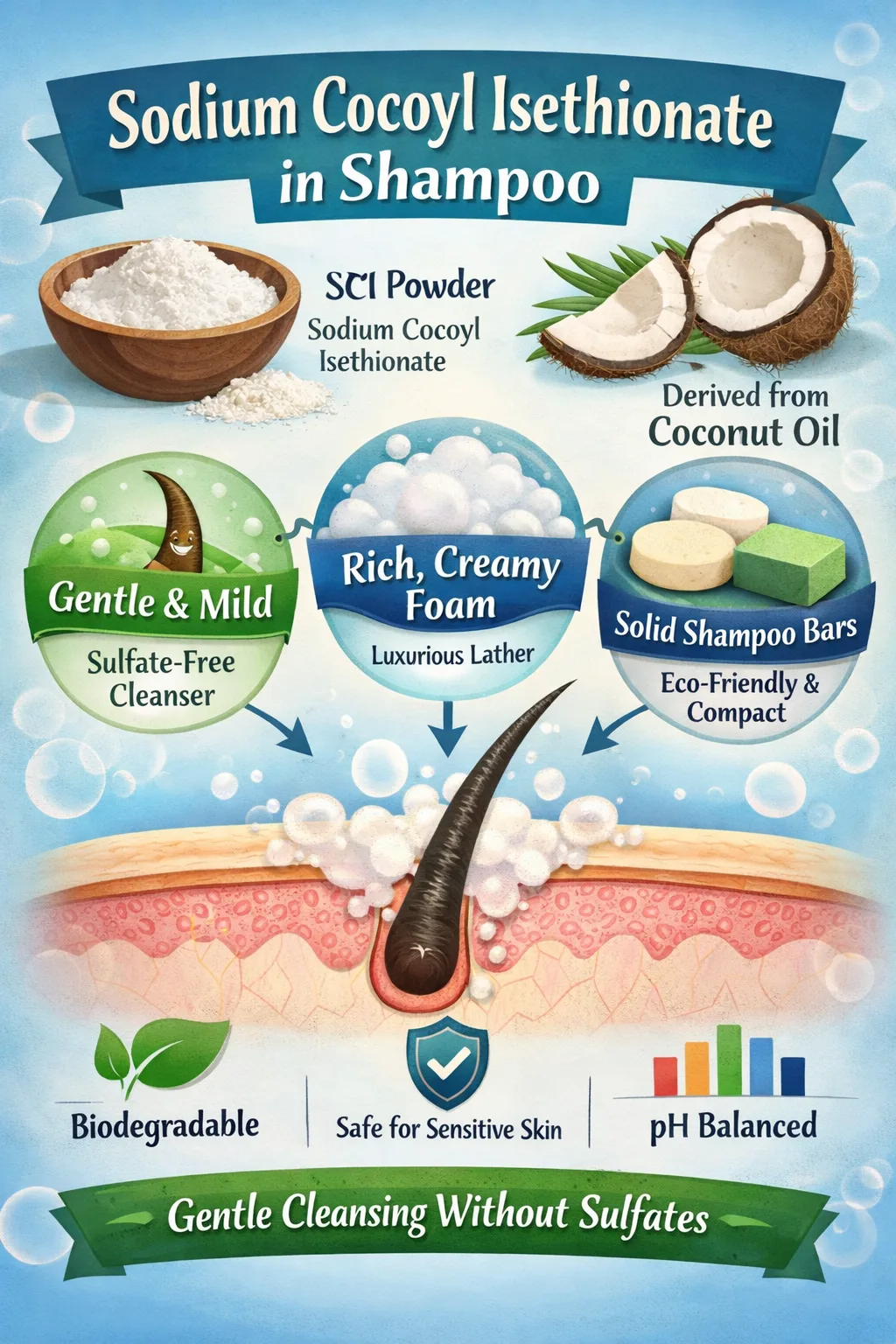
Sodium cocoyl isethionate (SCI) is a gentle anionic surfactant derived from coconut fatty acids. It is best known for creating:
- A rich, creamy lather
- Excellent cleansing without harsh stripping
- A soft, conditioned hair feel
SCI is a primary cleanser in:
- Sulfate-free liquid shampoos
- Syndet shampoo bars
- Baby and sensitive-skin cleansers
- Facial cleansers and body washes
It is sometimes referred to as a “syndet” surfactant, meaning a synthetic detergent designed to mimic soap—without soap’s high pH or harshness.
Where Does SCI Come From?
SCI is coconut-derived, but like most modern surfactants, it is chemically processed for safety, stability, and performance.
Simplified production process:
- Coconut oil is split into fatty acids
- These fatty acids are converted into cocoyl isethionate
- Sodium is added to create a water-compatible surfactant
The end result is a biodegradable, plant-based cleansing agent that performs far better than traditional soap.
Why Shampoos Use SCI
1. It Is Exceptionally Gentle
Compared to traditional sulfates like sodium lauryl sulfate (SLS), SCI:
- Cleans without disrupting the scalp barrier
- Causes significantly less irritation
- Is suitable for daily use and sensitive scalps
Its mildness makes it common in:
- Baby shampoos
- Curly hair products
- Color-treated hair formulas
- Shampoos for eczema-prone scalps
2. It Produces a Rich, Creamy Lather
One of SCI’s standout features is its luxurious foam. Unlike many natural surfactants that produce large, airy bubbles, SCI creates:
- Dense, creamy lather
- Stable foam even in hard water
- A silky cleansing experience
This allows sulfate-free shampoos to feel familiar and effective without relying on harsh detergents.
3. It Works Perfectly in Solid Shampoo Bars
SCI is a cornerstone ingredient in solid shampoo bars because:
- It compresses well into bar form
- It does not require preservatives
- It remains stable across temperature changes
For brands aiming to reduce plastic packaging, SCI makes high-performance zero-waste shampoos possible.
4. It Leaves Hair Soft and Conditioned
Unlike soap-based cleansers, SCI:
- Does not raise the hair cuticle excessively
- Helps maintain natural moisture balance
- Reduces post-wash dryness and frizz
Many users find shampoos with SCI require less conditioner after washing.
Is SCI Safe?
Safety and Regulation
Sodium cocoyl isethionate:
- Is approved for cosmetic use globally
- Is used in baby and facial products
- Has a strong safety profile when properly formulated
It is considered non-toxic and biodegradable and does not bioaccumulate in the environment.
Potential Irritation Concerns
SCI is among the least irritating surfactants available. However:
- In very high concentrations, it may cause dryness
- Inhalation of fine SCI powder during manufacturing can irritate lungs (relevant to formulators, not consumers)
Finished shampoos containing SCI are well tolerated by most skin types.
Is SCI “Natural”?
This depends on how “natural” is defined.
| Criteria | SCI |
|---|---|
| Coconut-derived | Yes |
| Biodegradable | Yes |
| Sulfate-free | Yes |
| Raw, unprocessed | No |
| Accepted in natural brands | Yes |
Most clean beauty standards classify SCI as naturally derived, not synthetic in the petrochemical sense.
SCI vs Soap: Why It Matters
Traditional soap:
- Has a high pH (9–10)
- Can damage the scalp barrier
- Leaves hair rough and dull
SCI-based shampoos:
- Are pH-balanced (5–6)
- Clean gently without residue
- Improve long-term hair health
This is why modern shampoos—especially solid bars—rely on SCI instead of soap.
Why SCI Is a Staple in Modern Shampoos
SCI offers a rare combination of:
- Exceptional mildness
- Rich, satisfying lather
- Compatibility with sensitive scalps
- Sustainability and biodegradability
For these reasons, SCI remains one of the most trusted surfactants in sulfate-free and natural shampoo formulations.
Bottom Line
Sodium cocoyl isethionate (SCI) is a coconut-derived, ultra-mild surfactant that allows shampoos to cleanse effectively without harsh sulfates or soap. It is especially valuable in solid shampoo bars and sensitive-skin formulations.
If you see SCI on an ingredient list, it is generally a strong indicator of a gentle, well-designed shampoo.