If you’ve ever gone down the rabbit hole of health supplements, you’ve probably seen three little letters pop up: NAC. Short for N-acetylcysteine, this compound has been used in medicine for decades—but lately, it’s getting more love in the wellness world. So what exactly is NAC, and why are people adding it to their supplement lineup? Let’s break it down.
What Is NAC?
NAC is basically a stable form of the amino acid cysteine. In your body, it helps make glutathione—a master antioxidant that protects your cells from oxidative stress (aka the daily wear and tear caused by stress, toxins, and just being alive).
In hospitals, NAC is actually a lifesaving drug—it’s used to treat acetaminophen (Tylenol) overdoses and even some lung conditions because it helps thin mucus. Pretty wild that the same thing you can order as a supplement is also on the ER crash cart.
The Potential Benefits of NAC
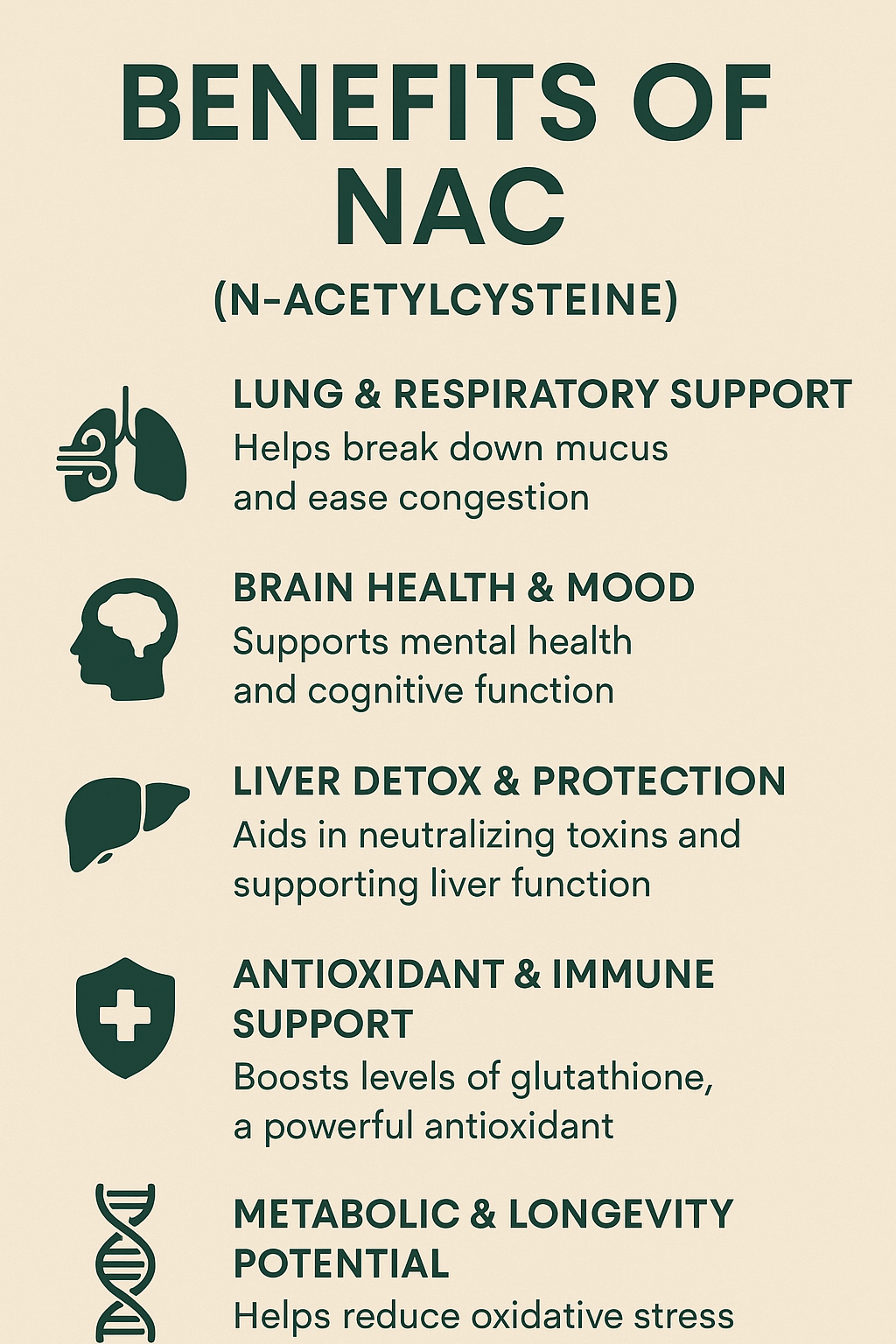
💨 Lung & Respiratory Support
Because NAC helps break down mucus, it’s been used in conditions like chronic bronchitis, COPD, and even to support recovery from respiratory infections. Some research also suggests it may help reduce the severity of seasonal flu symptoms.
🧠 Brain Health & Mood
NAC’s ability to boost glutathione seems to have effects in the brain, too. Studies have explored it for supporting mental health conditions like depression, bipolar disorder, OCD, and even addictions. While it’s not a cure-all, some people do notice improvements in mood and mental clarity.
❤️ Liver Detox & Protection
This is where NAC really shines. It helps the liver neutralize toxins—hence its use in Tylenol overdose. Even at regular supplement doses, NAC may support healthy liver function, especially if you’ve had high toxin exposure or drink alcohol.
🛡 Antioxidant & Immune Support
By replenishing glutathione, NAC gives your immune system a leg up. Some people take it as part of their “immune stack” during cold and flu season.
🧬 Metabolic & Longevity Potential
There’s growing research into NAC’s role in reducing oxidative stress, which plays into aging, insulin resistance, and chronic inflammation. Early animal studies even hint at life-extending effects, though we’ll need more human data before calling it an “anti-aging miracle.”
Side Effects & Safety
NAC is generally well tolerated, but it’s not for everyone. Some people report:
- Mild stomach upset (nausea, diarrhea, bloating)
- Headaches
- Rarely, skin rashes or allergic reactions
Because NAC acts on the liver and interacts with glutathione metabolism, it can affect how certain medications work (like nitroglycerin or some blood pressure meds). If you’re on prescription meds or have a chronic condition, check with your doctor first.
What the Research Says
- A 2016 meta-analysis found NAC helpful in reducing symptoms of psychiatric conditions like OCD and trichotillomania (hair pulling disorder).
- Lung studies have shown NAC can reduce exacerbations in people with COPD.
- Research is ongoing into NAC for fertility, long COVID, and even preventing kidney injury during hospital procedures.
- The FDA has gotten a little weird about NAC supplements lately, since it’s technically approved as a drug—but for now, you can still buy it in capsule or powder form from most supplement companies.
Best NAC Supplements
If you’re considering trying NAC, here’s what to look for:
- Dosage: Most supplements come in 500–600 mg per capsule. Typical daily use is 600–1200 mg, though therapeutic doses can be much higher under medical supervision.
- Form: Capsules are easiest, but powder is more cost-effective (just be warned, NAC has a strong sulfur smell—kind of like rotten eggs).
- Brands: Look for trusted names with third-party testing. Some solid options include:
- NOW Foods NAC 600 mg
- Thorne NAC
- Life Extension NAC
- Jarrow Formulas NAC Sustain (time-release)
- If you are in the market for a supplement use the Amazon links above! we get credit for them and it helps the site out. Thanks!
Bottom Line
NAC is one of those underrated supplements that straddles the line between medicine and wellness. It supports the liver, lungs, brain, and immune system, with a growing pile of research behind it. While it’s not something everyone needs daily, it could be a smart addition if you’re looking for extra antioxidant support, dealing with chronic respiratory issues, or just want to boost your body’s natural detox systems.
As always—talk with a healthcare pro before starting, especially if you’re on meds.