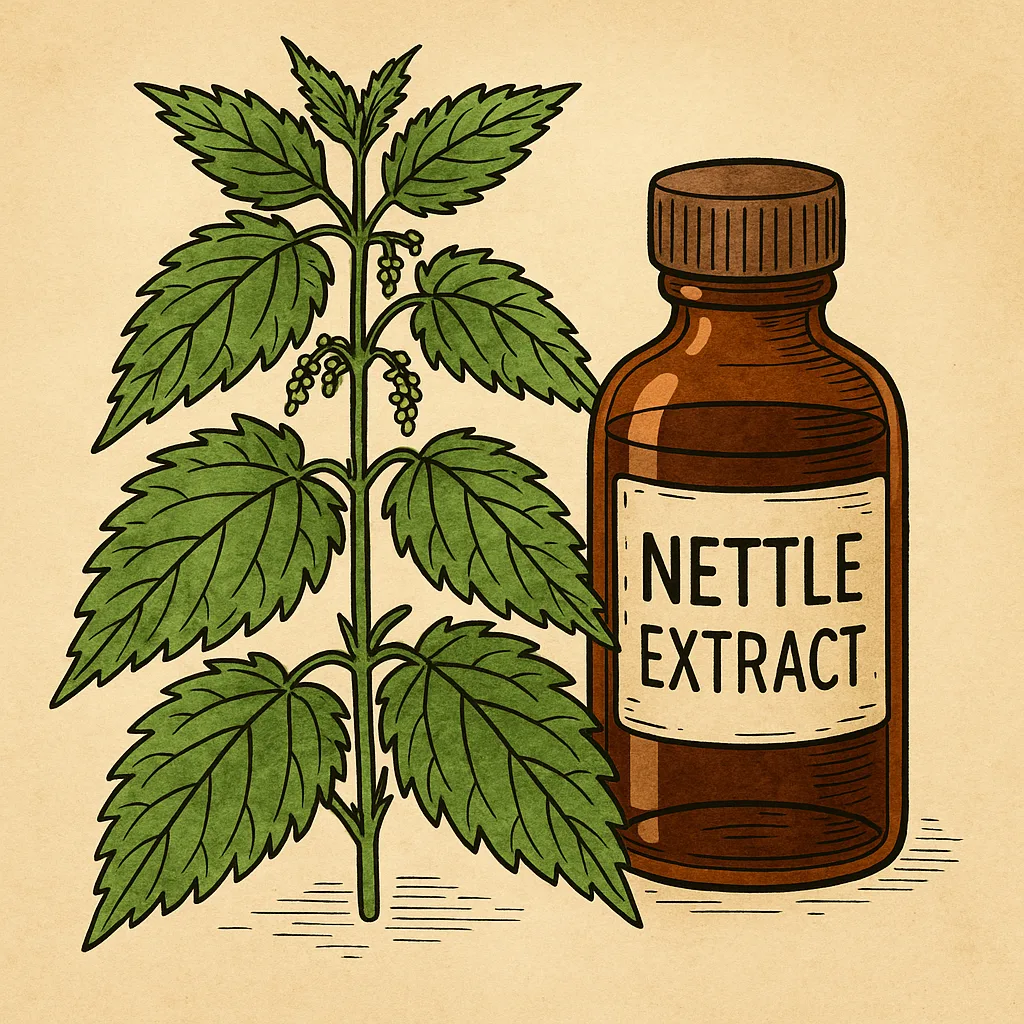
Stinging Nettle, lets talk.
There’s something poetic about plants that make you earn their respect.
Out here in the country, you learn quickly: touch a patch of stinging nettles without gloves, and you’ll remember it for the rest of the day. The burn, the itch, that electric sting — it’s like nature’s way of saying, “Look, I’ve got boundaries.”
But here’s the twist: that same prickly weed — the one hiding in ditches and creek banks — is also one of the most therapeutically powerful herbs we know.
And when turned into stinging nettle extract, it goes from “backyard menace” to anti-inflammatory powerhouse.
Let’s talk about it, rural-style — science meets story, with a little respect for plants that fight back.
☕ The Day I Met Nettle (and Learned My Lesson)
I met my first nettle patch during a spring hike behind the clinic.
The leaves looked harmless enough — green, soft, almost fuzzy. I reached down.
Instant regret.
Within seconds, my hand was on fire. Tiny hairs on the leaves had injected histamine, serotonin, and formic acid — the same chemical found in ant bites. My skin puffed up, tingled, and throbbed.
A few hours later, though, the sting faded. And the irony? That same reaction is what gives nettle its medicinal edge. It wakes up the immune system.
Sometimes, the things that hurt us a little… heal us a lot.
🌿 What Exactly Is Stinging Nettle Extract?
Stinging nettle (Latin name Urtica dioica) is a leafy green plant found in temperate climates all over the world.
While the raw plant is known for its sting, its extract — made from the roots or leaves — is full of beneficial compounds like:
- Flavonoids (antioxidants)
- Lignans and sterols (hormone-modulating agents)
- Polysaccharides (immune-supporting compounds)
- Formic acid and histamine (small amounts that modulate inflammation, not trigger it)
Nettle extract has been used for centuries — from medieval Europe to traditional Native American medicine — to treat everything from arthritis to allergies.
🧬 The Science: Why This Weed Deserves a Medical Degree
Let’s translate the science into plain English.
1. It tames inflammation.
Stinging nettle extract naturally inhibits NF-κB, one of the key molecules that drives inflammation in the body.
That makes it useful for conditions like:
- Arthritis and joint pain
- Seasonal allergies
- Chronic inflammation (the “silent smolder” behind fatigue and stiffness)
2. It supports prostate health.
The root extract specifically helps with benign prostatic hyperplasia (BPH) — that slow stream and constant urge men get with age.
It reduces prostate swelling and improves urine flow.
Many European herbal formulas for prostate health include nettle alongside saw palmetto.
3. It gently balances hormones.
Nettle’s plant sterols and lignans can influence how the body binds to and metabolizes sex hormones, especially testosterone and estrogen.
That’s why it pops up in supplements for both men’s hormone health and women’s PMS/menopause support.
| Function | Main Benefit | Key Compounds |
|---|---|---|
| Anti-inflammatory | Eases pain, arthritis, allergies | Flavonoids, lectins |
| Prostate health | Reduces swelling, improves urine flow | Root sterols, lignans |
| Hormone modulation | Supports testosterone/estrogen balance | β-sitosterol, lignans |
| Allergy relief | Lowers histamine response | Quercetin, formic acid |
| Blood sugar support | Improves insulin sensitivity | Chlorogenic acids |
It’s not just folklore — it’s biochemistry with bark.
🧠 Allergies, Sneezes, and the Great Nettle Rebrand
If you’ve ever suffered through spring pollen season — red eyes, itchy nose, endless sneezing — you’ll appreciate this one.
Nettle leaf extract acts as a natural antihistamine.
Instead of blocking histamine artificially like Claritin does, nettle modulates your own histamine response so your immune system chills out instead of overreacting.
Some studies show it can cut allergy symptoms by 30–40%.
My patients love it because it doesn’t make them sleepy, and it can be combined safely with standard allergy meds if needed.
I tell folks it’s like teaching your immune system better manners.
💪 Nettle for Joints, Pain, and That “Morning Creekiness”
You know that moment when you get out of bed and your knees pop like bubble wrap?
Yeah. That’s inflammation.
Nettle extract helps by calming cytokines — those inflammatory messengers that make everything ache.
Unlike NSAIDs, it doesn’t just mask pain; it encourages your cells to rebalance their inflammatory response.
It also improves circulation and helps flush out uric acid, which makes it useful for mild gout or swelling.
Pair it with MSM or turmeric, and you’ve got yourself a solid natural anti-inflammatory combo.
🩺 Nettle in Rural Medicine: The People’s Plant
Nettle is one of those remedies that bridges the gap between herbalists and physicians — a rare overlap of folklore and evidence.
You can find it wild along fences and riverbanks, or bottled neatly in supplement aisles.
Around here, I’ve seen folks use nettle for:
- Arthritis and muscle aches
- Allergies and sinus issues
- Water retention and mild swelling
- Energy and nutrient support (it’s loaded with iron, calcium, and magnesium)
When I prescribe it, I see it as a “gentle modulator” — not a hammer, but a tuning fork for the immune and inflammatory systems.
And maybe that’s why it’s stuck around for centuries: it doesn’t force the body; it nudges it toward balance.
🌾 How to Take It (and What to Expect)
Most supplements use freeze-dried leaf extract or root extract, depending on the goal.
| Use Case | Best Form | Typical Dose |
|---|---|---|
| Allergies & inflammation | Leaf extract | 300–600 mg twice daily |
| Prostate support | Root extract | 250–500 mg twice daily |
| Joint & hormone balance | Combination formulas | 400–800 mg daily |
It’s very safe for long-term use, though it can mildly increase urination (a natural diuretic effect).
Occasionally, people get mild stomach upset — taking it with food usually solves that.
💚 The Human Side of a Healing Weed
One of my favorite things about nettle is that it reminds us how medicine and nature overlap.
A weed becomes a therapy.
A sting becomes a signal to pay attention.
And what we once tried to get rid of ends up helping us feel better.
It’s humble. It’s earthy. It doesn’t sparkle in a pharmacy ad.
But it works — not just on lab markers, but on people’s lives.
Sometimes the best medicine is the kind that grows right outside your fence.
🌿 Quick Facts
| Category | Details |
|---|---|
| Full Name | Urtica dioica (Stinging Nettle) |
| Main Actions | Anti-inflammatory, hormone-modulating, antihistamine |
| Common Uses | Allergies, prostate health, arthritis, hormone balance |
| Typical Dose | 300–600 mg twice daily (leaf) |
| Pair With | MSM, turmeric, quercetin, saw palmetto |