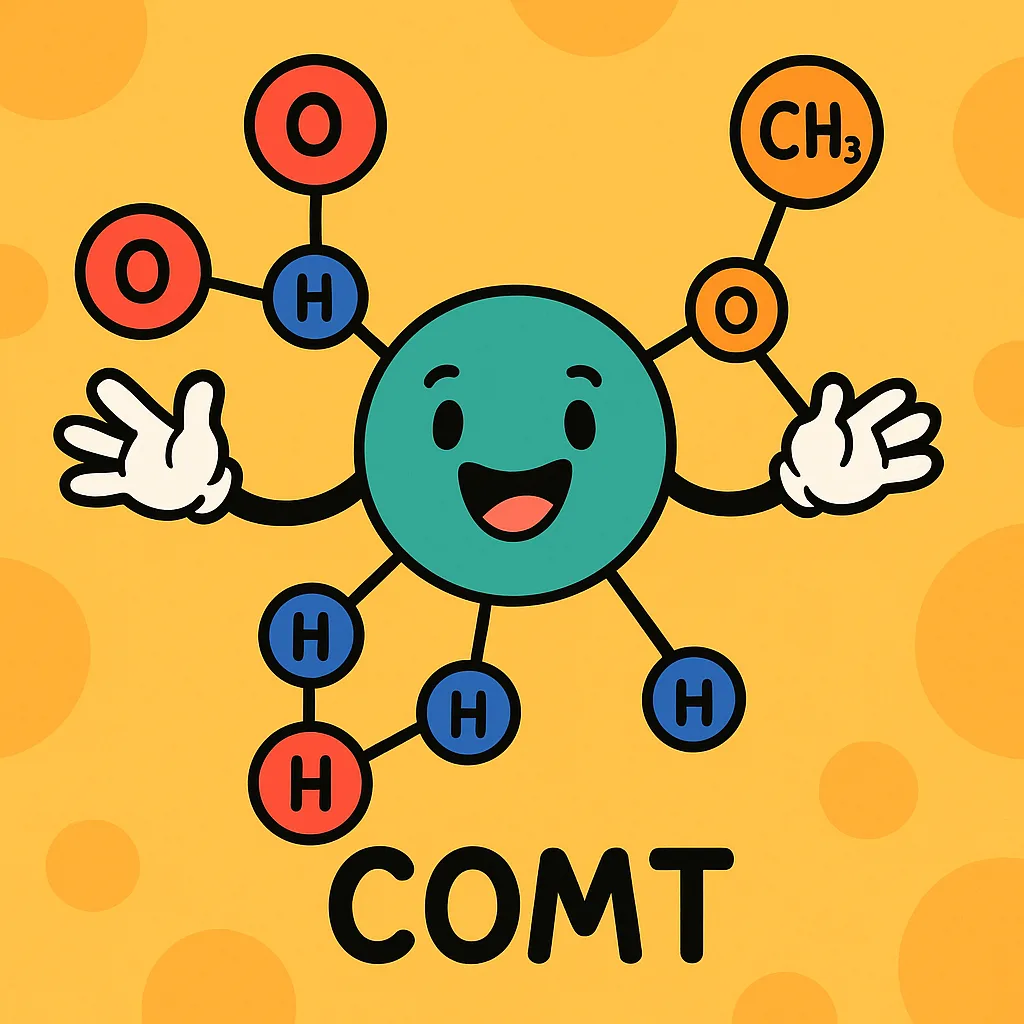
COMT stands for Catechol-O-Methyltransferase, which is an enzyme in the body that breaks down certain neurotransmitters and hormones.
🔬 What COMT Does
- It adds a methyl group to catechols (molecules with two hydroxyl groups on a benzene ring).
- This process helps deactivate and clear substances such as:
- Dopamine
- Norepinephrine (noradrenaline)
- Epinephrine (adrenaline)
- Catechol estrogens (estrogen breakdown products)
🧠 Why COMT Matters
- Brain function & mood: COMT controls how long dopamine and norepinephrine stay active in the brain.
- Stress response: It regulates how quickly adrenaline is cleared after a stressor.
- Hormone balance: It helps metabolize estrogens, so it plays a role in hormone-related conditions.
🧬 Genetics
- The COMT gene (on chromosome 22) codes for this enzyme.
- A common genetic variant is Val158Met:
- Val/Val (high activity COMT): breaks down dopamine quickly → lower dopamine levels, often more calm but may have issues with focus or motivation.
- Met/Met (low activity COMT): breaks down dopamine slowly → higher dopamine levels, often more focused but may be prone to anxiety, stress, or overwhelm.
- Val/Met (intermediate).
💊 Relevance in Health
- People with slow COMT may be more sensitive to stimulants (like caffeine) or methyl donors (like methyl folate, B12).
- People with fast COMT may burn through dopamine too quickly and benefit from extra support (like adaptogens, certain amino acids).
- COMT activity can also influence how well someone tolerates hormone replacement, antidepressants, or even stress in daily life.
✅ In short: COMT is a key enzyme for breaking down stress hormones, dopamine, and estrogen metabolites. Differences in its activity (from genetics or nutrient availability) can affect mood, stress tolerance, and hormone balance.